
Are the Cornering Rider Safety Enhancements on the 2026 Harley-Davidson® Road Glide® worth it for Hagerstown, MD riders?
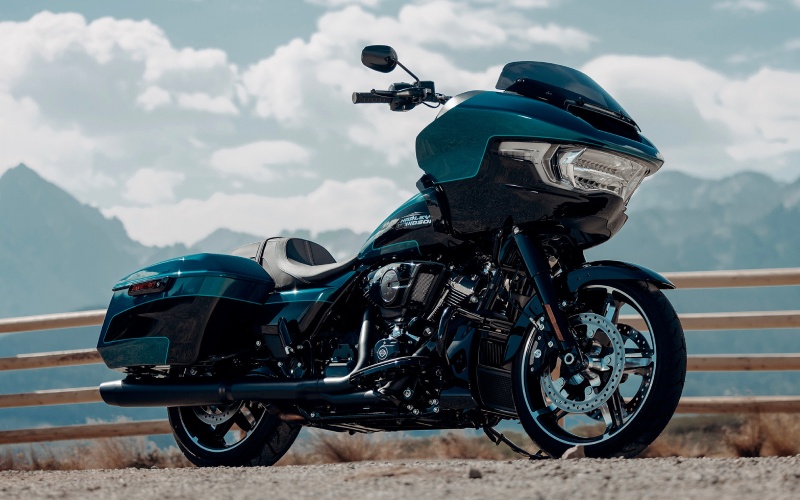
Eisenhauer's York Harley-Davidson® - Are the Cornering Rider Safety Enhancements on the 2026 Harley-Davidson® Road Glide® worth it for Hagerstown, MD riders?
Riders who split their time between interstate commutes, rolling backroads, and city stoplights often ask how much real-world value electronic safety aids provide on a premium touring bike. The 2026 Harley-Davidson® Road Glide® brings an advanced suite of Cornering Rider Safety Enhancements that are engineered to work in the background when traction, lean angle, and braking loads matter most. Understanding what these systems do — and when they step in — helps you decide how they fit your daily riding in and around Hagerstown, MD.
Rather than replacing rider skill, these systems modulate brake pressure and engine torque in edge cases where a patch of gravel, an abrupt downshift, or a sudden stop could otherwise upset the chassis. The Road Glide® handles like a classic long-distance Harley-Davidson®, but its electronics deliver an extra margin when conditions are less than ideal. That makes a compelling case for riders who leave before sunrise, ride year-round, or regularly encounter wet mornings and wind-blown debris on scenic routes.
When mapping your safety priorities, it helps to consider where each system contributes and how that aligns with your routes. Below are the core elements and how they show up in day-to-day riding.
- C-ABS and C-ELB: Cornering-aware ABS and linked braking modulate pressure with lean angle taken into account, helping you maintain your intended line during mid-corner slowdowns or evasive stops.
- C-TCS: The Cornering Enhanced Traction Control System tempers wheelspin under acceleration, whether you are standing the bike up out of a turn or pulling through a rain-soaked merge.
- DSCS and C-DSCS: These systems mitigate excessive rear-wheel slip on abrupt deceleration or downshifts, especially on slick surfaces or when trail braking into a decreasing-radius turn.
- Vehicle Hold Control: VHC holds the brakes for smoother hill starts, making ramp exits and steep city intersections far less stressful.
- TPMS: Tire Pressure Monitoring System provides timely alerts on the TFT display, helping preserve handling, braking performance, and tire life between service visits.
Cornering functionality is the key differentiator on the 2026 model. Traditional ABS and traction control are valuable, but adding lean-angle context means the system can better match your intent as you tip into a turn or pick the bike up on exit. That nuance translates to a calmer chassis, a more predictable line, and the confidence to ride your plan instead of reacting to surprises.
It is also important to frame these systems within the Road Glide® platform. The 49 mm Dual Bending Valve fork and dual outboard emulsion shocks with preload adjustability provide a controlled, comfortable ride that responds predictably to inputs. The redesigned Sharknose fairing reduces buffeting and stabilizes airflow, which can help you focus on the road surface and traffic. Combine these fundamentals with the Skyline™ OS 12.3 in. TFT display — including navigation, Apple CarPlay support, voice functions, and clear bike data — and you have a cockpit that informs decision-making and reduces cognitive load.
For riders who regularly thread through traffic, climb over mountain ridges, and roll long interstate segments, the case for the Cornering Rider Safety Enhancements is strong. The systems are quiet most of the time, then invaluable when you need them. If your routes include early departures, sudden weather changes, or varied pavement, they align perfectly with how the 2026 model is meant to be ridden.
Eisenhauer's York Harley-Davidson® is proud to support riders across Central Pennsylvania and Northern Maryland, serving Reading, Chambersburg, and Hagerstown with guidance on setup, safety systems, and touring ergonomics that match real-world routes.
Frequently Asked Questions:
Do Cornering Rider Safety Enhancements change the feel of the brakes or throttle during normal riding?
In typical conditions, the systems stay out of the way. They activate when sensors detect wheel slip or braking forces that could exceed available traction, adjusting brake pressure or engine torque smoothly to help preserve your intended path.
Can I still brake hard in a straight line without interference?
Yes. Straight-line, urgent braking benefits from ABS to help prevent wheel lock. Cornering-aware logic activates primarily when lean angle is detected, adding context so intervention feels proportional and controlled.
How does C-DSCS help during aggressive downshifts?
C-DSCS moderates rear-wheel slip caused by engine braking on abrupt downshifts or rapid throttle closures, especially useful on cold mornings, rain-wet surfaces, or mid-corner deceleration where stability matters.
Will these systems work if I customize wheels or tires?
Always follow OEM fitment guidance. The systems are calibrated for factory-spec tire sizes and profiles. If you change tire type or size, consult our service team to confirm compatibility and maintain optimal performance.