
Can the 2026 Harley-Davidson® Street Glide® handle steep gravel driveways near Parkton, MD?
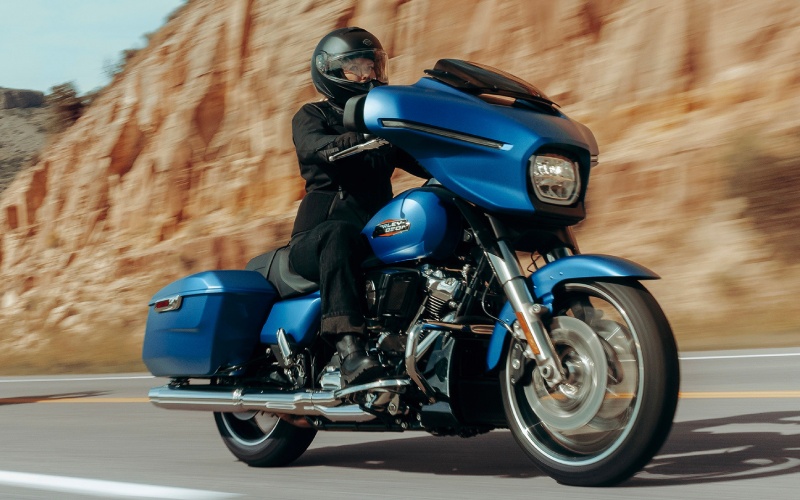
Eisenhauer's York Harley-Davidson® - Can the 2026 Harley-Davidson® Street Glide® handle steep gravel driveways near Parkton, MD?
Riders around Parkton know that the last 200 feet home can be the trickiest part of the day. Steep, washboarded gravel lanes off MD-45 or the rolling, shaded drives off Middletown and Hereford Road ask for steady throttle, measured braking, and a bike that does not get unsettled when the surface moves under the tires. At Eisenhauer's York Harley-Davidson®, we are often asked whether the 2026 Harley-Davidson® Street Glide® is up for that task. The short answer is that the Street Glide® is a road-focused touring motorcycle that can absolutely navigate steep or loose driveways with care — and its modern Rider Safety Enhancements are designed to help you manage traction, braking, and hill starts when conditions are less than perfect.
Why this question matters in Parkton
North Baltimore County blends winding pavement with unpaved or chip-and-seal lanes, abrupt elevation changes, and driveways that crown toward ditches or stone walls. On a big touring bike, traction and balance are everything when you crest the apron, feather the clutch, or back into a flat spot to turn around. The 2026 Street Glide® brings a low, confidence-inspiring 26.4 in. laden seat height, a tractable Milwaukee-Eight® 117 producing 130 ft-lbs of torque at 3,250 rpm, and a suite of Harley-Davidson® Rider Safety Enhancements that step in to help you keep things composed on variable surfaces commonly found near Parkton.
Before we dig into the tech, it is worth remembering the Street Glide®’s mission. This is a Grand American Touring model that is tuned for pavement — it is not a dual-sport and it wears Dunlop® Harley-Davidson Series bias blackwall tires sized 130/60B19 front and 180/55B18 rear. With that said, the chassis and electronic systems can make those short gravel segments far more manageable when you ride with measured inputs.
How the 2026 Street Glide® helps on loose surfaces
Traction and balance on gravel come down to smooth power delivery, controlled deceleration, and the ability to pause without rolling backward on an incline. The 2026 Street Glide® checks those boxes with technologies that work quietly in the background while you focus on line choice and body position.
- Traction Control System (TCS) and Cornering Enhanced Traction Control (C-TCS): Designed to prevent excessive rear wheel spin in straight lines and while leaning, these systems gently manage torque when the rear tire encounters marbles or washboard, helping you hold a controlled drive up the grade.
- Drag-Torque Slip Control System (DSCS) and Cornering Drag-Torque Slip Control (C-DSCS): Abrupt downshifts on gravel can overwhelm rear traction. DSCS/C-DSCS help mitigate rear wheel slip under engine braking, keeping the chassis calm as you ease into the driveway or descend a loose hill.
- Anti-lock Brake System (ABS) and Cornering Enhanced ABS (C-ABS): When you need to slow mid-hill on a dusty or rutted surface, ABS/C-ABS are designed to modulate brake pressure to help maintain steering control, especially valuable if the driveway bends as it climbs.
- Electronic Linked Braking (ELB) and Cornering Enhanced ELB (C-ELB): Squeezing only the front brake on loose surfaces can feel dicey. ELB/C-ELB electronically balance pressure between front and rear — particularly helpful on uneven surfaces where weight transfer is unpredictable.
- Vehicle Hold Control (VHC): Hill starts are where many riders feel most vulnerable. With VHC, a firm squeeze of the front lever or press of the rear pedal at a stop keeps the brakes engaged until you roll on, reducing rollback so you can coordinate throttle and clutch with less stress.
- Tire Pressure Monitoring System (TPMS): Proper pressures preserve sidewall support and footprint. TPMS alerts you if pressures drift, which can be the difference between a composed climb and a wandering front end on pea gravel.
Pair those aids with the Street Glide®’s ride-tuned rear suspension — dual outboard emulsion shocks with 3 in. of travel and preload adjustability — and a stout 49 mm Dual Bending Valve front fork. That suspension combination helps the bike settle instead of chatter when the surface turns to stone and dust. If your driveway has cross ruts or a drainage hump, the 5.5 in. of ground clearance gives you room to sidestep or square up without hard parts immediately touching.
The powertrain’s smoothness also matters. The liquid-cooled Milwaukee-Eight® 117 delivers a broad, low-rpm torque curve that responds predictably to small throttle openings — exactly what you want when tiptoeing up a loose incline. Many riders near Parkton select a gentler ride mode for this scenario, since Street Glide® ride modes adjust throttle response and intervention thresholds to help you meter power on marginal grip.
Line choice and inputs — what matters most on driveway climbs
Technology works best when paired with good technique. For Parkton’s steeper gravel and chip-and-seal entrances, choose the cleanest path where the stone is packed, look where you want to go, and keep momentum steady. Lightly cover the rear brake for balance, keep the bars relaxed, and avoid sudden downshifts that spike engine braking. If backing into a parking spot at the top, pick a flat, packed area and square the bike before you stop so VHC can hold you cleanly while you dismount.
The Street Glide®’s one-piece seat and neutral floorboard position help you stay centered and secure as the bike moves around beneath you. The Next Generation batwing fairing also reduces head toss at low speeds when a gust rolls across a clearing — subtle, but it keeps your inputs smooth on delicate surfaces.
Setup checklist before you tackle a steep gravel drive
A little pre-ride attention pays off on loose ground. Here is how we suggest Parkton riders prep the 2026 Street Glide® for those last few yards to the house or barn:
- Confirm tire pressures via TPMS: Set to factory specs for a predictable footprint and stable carcass support on stone.
- Select an appropriate ride mode: Choose a gentler throttle map if your driveway is steep or freshly graded to help you meter power.
- Dial in rear preload for your load: If you are riding two-up or carrying gear, add preload so the chassis sits in its sweet spot.
- Plan your line before you turn off the road: Identify the packed track, avoid deep marbles, and aim for a level stopping area up top.
- Use VHC on the final stop: Firmly apply a brake at a complete stop to engage VHC so the bike does not roll while you set your feet.
- Keep inputs smooth: Steady throttle, light rear brake for balance, and progressive clutch engagement reduce wheelspin and chassis wiggle.
If your driveway frequently washes out or changes texture with deliveries and grading, our team can walk you through setup tweaks and maintenance habits that keep the Street Glide® feeling settled. Even small items — like ensuring your controls are adjusted for your reach — can improve low-speed precision on loose surfaces.
One more local consideration: Parkton’s wooded lanes often collect fine dust and leaf litter at the crown and along the edges. Expect less grip there, especially after utility work or on warm afternoons when the top layer loosens. The Street Glide®’s Cornering Rider Safety Enhancements help you manage those transitions, but you will get the most benefit by staying relaxed, staying upright, and avoiding abrupt inputs as the surface changes.
On the way to and from home, the 12.3 in. Skyline™ OS display keeps you informed without distraction. Clear tire pressure readouts, customizable widgets, and Apple CarPlay connectivity allow you to keep your eyes ahead — helpful when the route includes a short unpaved connector or a blind driveway crest. When you return to pavement on MD-45 or I-83, the Street Glide® returns to its element — wind-cutting batwing fairing, all-LED signature lighting for visibility through shaded hollows, and a chassis tuned for confident, low-effort miles.
To sum it up, the 2026 Harley-Davidson® Street Glide® is a pavement-first touring motorcycle that, when ridden thoughtfully and set up correctly, handles steep gravel driveways around Parkton with composure. Its combination of low seat height, balanced suspension, and Rider Safety Enhancements — including TCS, DSCS, ABS, ELB, VHC, and TPMS — gives you tools that matter the moment asphalt turns to aggregate.
Our team at Eisenhauer's York Harley-Davidson® works with riders who live on these roads every day. If you want help dialing in suspension preload, understanding how ride modes interact with traction management, or exploring Harley-Davidson® Genuine Motor Parts that fit your touring needs, we are here to help you get the most from your Street Glide® on Parkton’s unique mix of surfaces.
Frequently Asked Questions:
Can I regularly ride the 2026 Harley-Davidson® Street Glide® on unpaved roads around Parkton, MD?
The Street Glide® is engineered for paved touring, but it can traverse short, well-maintained unpaved stretches — like many Parkton driveways — with care. Use a mellow ride mode, keep inputs smooth, rely on features like VHC for hill starts, and let TCS/ABS work if the surface gets loose. For frequent or extended off-pavement riding, choose your lines conservatively and remember that the tires, suspension, and ground clearance are optimized for asphalt, not off-road use.
If you would like tailored setup guidance for your driveway, reach out to our team at Eisenhauer's York Harley-Davidson®. We are happy to help you configure the 2026 Harley-Davidson® Street Glide® to suit your daily route in and around Parkton.