
How Do Cornering Rider Safety Enhancements Work on the 2026 Harley-Davidson® Street Glide® Limited for Manchester, MD Riders?
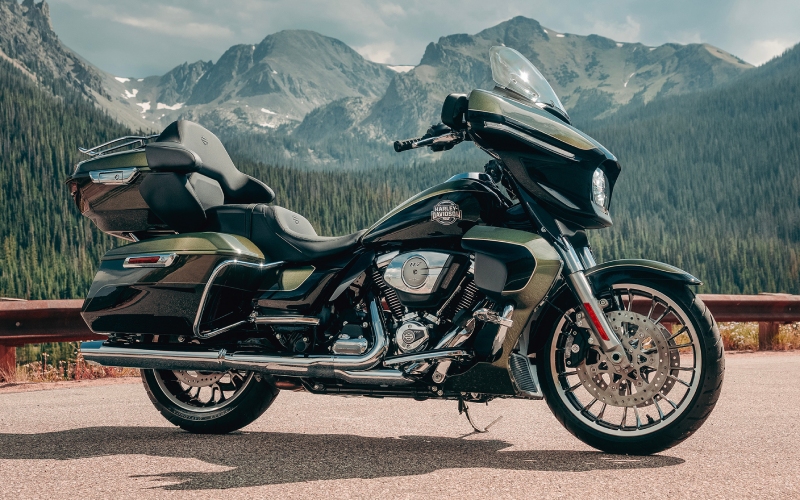
Eisenhauer's York Harley-Davidson® - How Do Cornering Rider Safety Enhancements Work on the 2026 Harley-Davidson® Street Glide® Limited for Manchester, MD Riders?
Riders who split time between winding two-lanes and busy interstates often ask how modern safety tech translates to everyday control. On the 2026 Harley-Davidson® Street Glide® Limited, Cornering Rider Safety Enhancements are designed to help the motorcycle maintain your intended path when lean angle and traction are in play. For Manchester, MD riders navigating rolling countryside followed by suburban traffic, those systems work in the background so you can focus on smooth throttle, precise braking, and consistent lines.
The foundation includes Anti-lock Brake System (ABS), Electronic Linked Braking (ELB), Traction Control System (TCS), Drag-Torque Slip Control System (DSCS), Vehicle Hold Control (VHC), and Tire Pressure Monitoring System (TPMS). Cornering variants—C-ABS, C-ELB, C-TCS, and C-DSCS—use sensors to recognize lean and adjust intervention accordingly. That means the brake pressure or traction support you feel in a straight line is intelligently moderated while you are turning, helping the bike stay settled without asking you to change your inputs mid-corner.
Think of C-ABS like this: braking demands change when you are leaned over, so the system modulates pressure to limit wheel slip in a curve. C-ELB then refines how braking force is proportioned between front and rear while cornering. On the throttle side, C-TCS works to keep rear-wheel spin in check as you roll on power leaned over—useful when a patch of gravel or a painted line appears exactly where you want to accelerate. C-DSCS helps when you roll off abruptly or downshift aggressively; it is designed to reduce rear-wheel slip caused by engine braking, especially helpful on a wet downhill or off-camber turn.
These systems do not replace rider judgment; they support it. Good vision, smooth inputs, and proper corner setup still matter most. But when a surprise presents itself—rippled pavement mid-turn, a slick manhole, an unexpectedly tight radius—the Cornering Rider Safety Enhancements are engineered to give you a more forgiving envelope.
Frequently Asked Questions:
Do I need to change how I brake or accelerate to “activate” the cornering features?
No. Ride normally with smooth, progressive inputs. The motorcycle’s sensors and control units monitor lean and adjust intervention as needed. Your best contribution is consistent technique—eyes up, steady throttle, and gradual brake release.
Will Cornering Rider Safety Enhancements limit performance during spirited rides?
The systems are calibrated to support predictable control rather than intrude. If traction is good and inputs are smooth, you will likely not notice them. Their role becomes apparent when conditions get inconsistent—like a damp apex or scattered gravel.
How does Vehicle Hold Control help in Manchester traffic or on steep driveways?
VHC keeps brake pressure applied after you squeeze the lever or pedal at a stop. On hills, ramps, or crowned roads, it helps prevent rollback while you coordinate throttle and clutch, providing a smoother launch.
What about tire pressure—why does TPMS matter for cornering?
Correct tire pressure is vital for grip, geometry, and feedback. TPMS alerts you to low or high pressure so you can address it before it affects handling. Proper inflation supports consistent turn-in and stable mid-corner feel.
When paired with the Milwaukee-Eight® VVT 117’s steady torque delivery, the Street Glide® Limited gives riders a reassuring combination of power and poise. For local guidance on setup, riding technique, and accessory choices that match your routes, connect with Eisenhauer's York Harley-Davidson®. We are serving Manchester, New Freedom, and Freeland with insights that help you get the most from your touring machine—on the back roads, the beltway, and everything in between.